











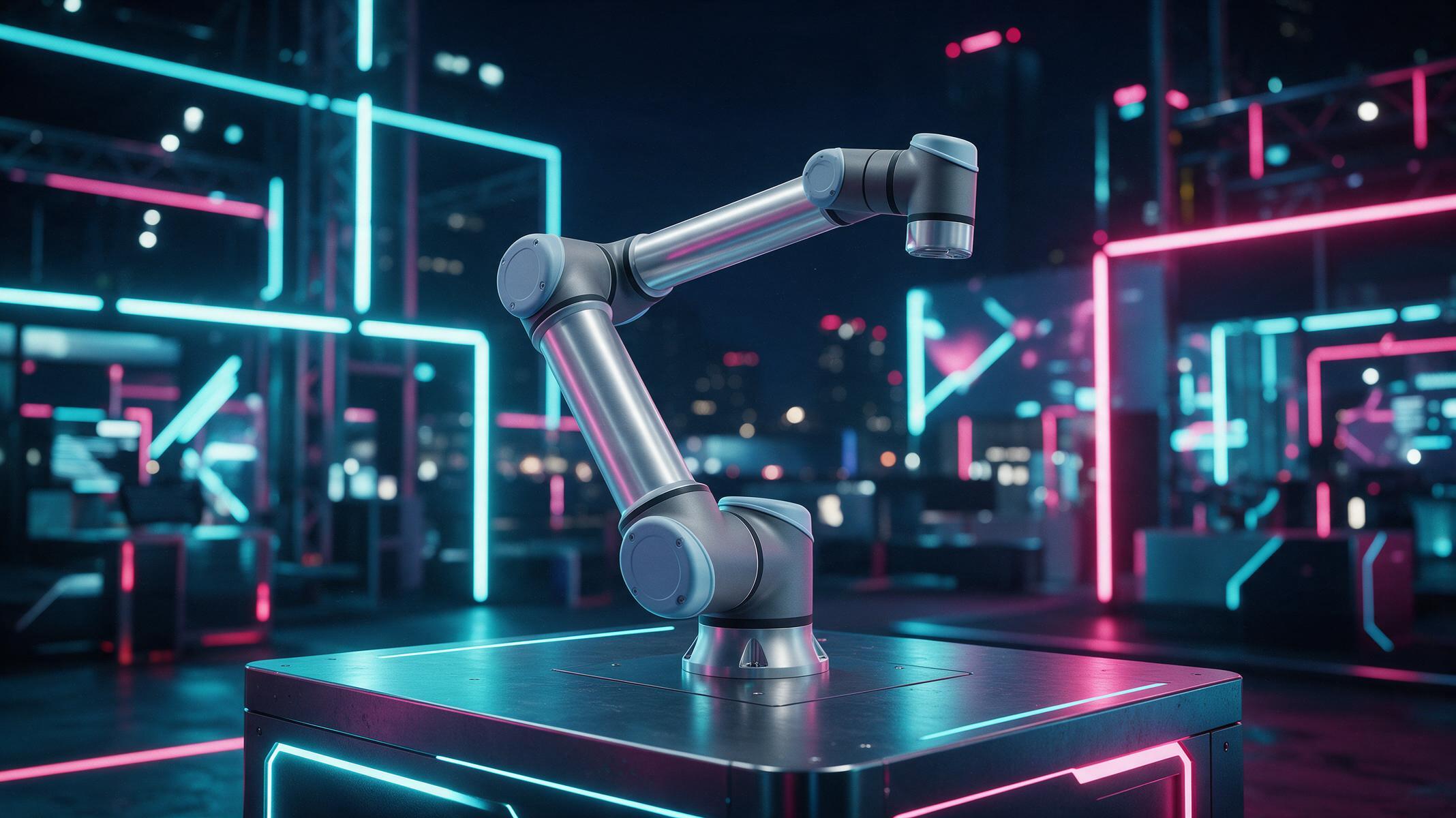
On October 13, Teradyne Robotics appeared at the 2026 China International Industrial Expo (CIIF) in Shanghai with two of its flagship brands: Universal Robots (UR), the collaborative robot pioneer, and MiR (Mobile Industrial Robots), its autonomous mobile robot business. The centerpiece of the stand was the Chinese debut of Gen 7, Universal Robots' seventh-generation robot platform.
Gen 7 is built on more than twenty years of cobot innovation and a base of well over 100,000 industrial deployments worldwide. The new platform is centered on the PolyScope X robot operating system, and it carries a fundamentally redesigned control box, teach pendant, and tool flange. According to the company, these changes make complex tasks and deployment workflows materially easier to complete, giving customers and integration partners more confidence to bring advanced AI-driven applications onto real factory floors.
Alongside the Gen 7 platform, Universal Robots launched three new robotic arms in the g-series: the UR10g-1750, UR17g-1300, and UR18g-950. The redesigned g-series tool flange can deliver data, power, and safety functions directly at the flange end, which makes it far simpler to attach cameras, high-bandwidth sensors, and end-effectors while eliminating complex cabling runs. The arms also embed torque sensing, impedance control, and RTDE (Real-Time Data Exchange) technology, enabling dexterous manipulation, force-controlled assembly, and other physically embodied AI applications that were previously difficult to deploy on collaborative arms.
For the welding and metal-fabrication industry, the significance is twofold. First, PolyScope X opens the platform to a much broader application ecosystem, including AI-assisted welding, inspection, and material-handling cells where vision systems and force control must work together at the torch. Second, the integrated flange interface lowers the integration cost of sensor-guided welding kits — camera-based seam tracking and adaptive fill control can now be connected with less custom wiring, shortening deployment cycles for small and mid-sized fabricators.
At a media briefing during the expo, Li Jiang, head of product and ecosystem for Teradyne Robotics in Greater China and the Asia-Pacific, noted that the group now operates its own factory in Nantong, Jiangsu Province. Before the Nantong plant came online, products shipped to Chinese customers needed eight weeks by sea or four weeks by air. With localized production, the delivery cycle has been cut by one to two weeks, dramatically improving responsiveness for local customers and system integrators.
Teradyne's localization push reflects a broader trend in China's robotics market: international vendors are moving from exporting finished robots to building, supporting, and co-developing them inside China, where demand for welding and factory automation continues to grow amid a persistent shortage of skilled welders. With Gen 7's China debut at CIIF 2026, Universal Robots is positioning its latest cobot generation directly against the fast-maturing domestic collaborative-welding ecosystem, betting that easier AI deployment and faster delivery will keep international platforms competitive on Chinese shop floors.