











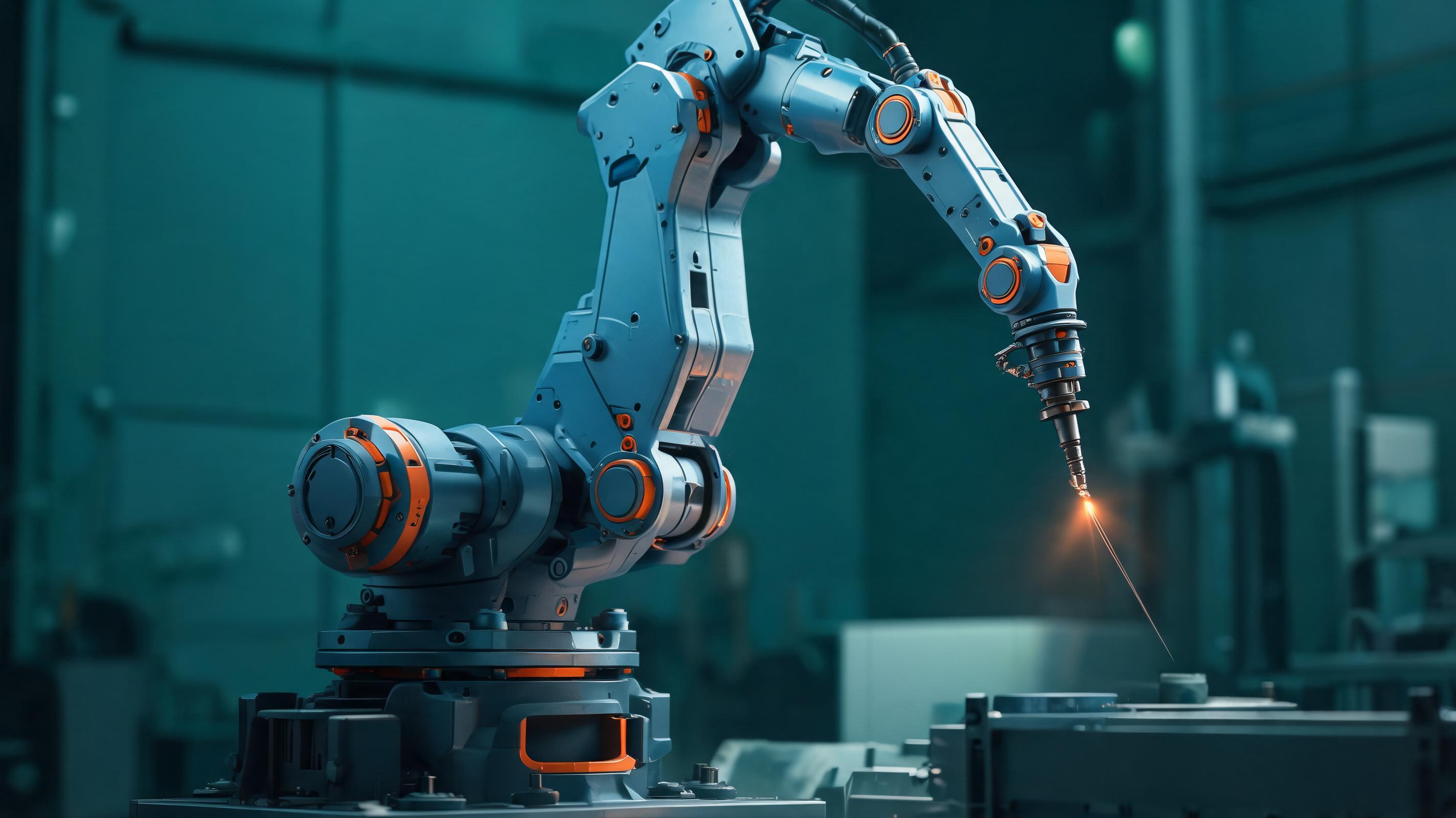
On May 31, 2026, Chengdu KANOPU Robot Technology Co. refiled its listing application with the Hong Kong Stock Exchange, making a second bid to become "China's No. 1 welding robot stock" after its first application lapsed on Nov 17, 2025, when it was not approved within the 180-day validity window.
Ranked by 2025 revenue, KANOPU has been China's largest welding robot manufacturer for two consecutive years (2024-2025), with welding robot revenue reaching 170 million yuan in 2025. Its products are sold to 40 countries and regions, though the domestic market still accounts for more than 80% of revenue, with Guangdong province the largest contributor at 18.3% in 2025.
Revenue has grown steadily: 222 million yuan in 2023, 234 million in 2024, and 324 million in 2025 — up 38.5% year over year. Gross margin also improved from 27.1% in 2023 to 33.0% in 2025, reflecting an optimized product mix. Yet the company has posted two straight years of net losses: 12.9 million yuan in 2024 and 16.1 million yuan in 2025. The prospectus attributes the losses to rising R&D spending, larger sales expenses, and reduced government subsidies. R&D expenditure was 36 million yuan in each of 2023-2024 and 48.9 million yuan in 2025, though the R&D share of revenue slipped from 16.2% to 15.1%. Trade receivables and notes reached 143 million yuan in 2025, with a 120-day turnover period that signals cash-flow pressure.
KANOPU's core competitive edge rests on a fully self-developed technology stack, from robot controllers to control software, hardware architecture, and welding processes. It holds 326 patents and 44 software copyrights. Its robots achieve repeat positioning accuracy down to 0.02 mm and positioning accuracy of 0.2 mm, while a "20-point multi-dimensional spatial mapping algorithm" improves absolute positioning accuracy five- to ten-fold to the 0.1 mm level.
The product line spans more than 70 models across industrial, collaborative, and embodied-intelligence robots. Industrial robots remain the base business, with 4,902 units sold in 2025 and 81.4% of revenue. Collaborative robot revenue grew nearly fourfold in 2025, while the embodied-intelligence line — first launched in 2022 — reached 300 units sold in 2025 at an average price of 80,000 yuan each, lifting that revenue more than 2.4 times year over year. In April, the second-generation wheeled humanoid robot RHM-T1W debuted at the Hannover Messe.
The company operates its own 35,000-square-meter production base in Chengdu, where design capacity grew from 4,500 units in 2023 to 7,000 in 2025 and utilization rose from 77.8% to 84.3%. On May 18, 2026, it opened an East China operations center in Suzhou to better serve the Yangtze River Delta manufacturing belt.
The first listing attempt lapsed after 180 days without approval. Analysts note that some Chapter 18C (specialist technology) applicants show persistent losses and reliance on external funding, drawing regulatory caution. KANOPU's R&D ratio has declined year by year, many core patents are older grants, and its gross margin runs unusually high for the sector — critics call it "threshold-skimming." Three R&D limitations have been flagged: collaborative robots need expansion into non-welding applications and embodied robots need better force-control precision; it lacks dedicated multimodal models for vertical scenarios; and it has no in-house AI model training capability.
The outlook remains bright: Frost & Sullivan projects China's industrial robot market to grow from 62.2 billion yuan in 2026 to 108 billion yuan by 2030, a 14.8% compound annual rate, with global embodied-intelligence robot revenue growing even faster at 31.9% (2.9 billion to 8.9 billion yuan). KANOPU's IPO proceeds will fund R&D upgrades, domestic and overseas expansion, capacity increases, and working capital. Shareholders include early investor Northern Light Venture Capital (13.35%) plus Zhongding Capital and Shuanghuan Driveline.
From controllers to welding robot leadership to embodied intelligence, KANOPU's path mirrors the promise and the commercialization pain of China's homegrown industrial robots. The second filing is both a capital-markets leap and a test of whether its self-developed model can stay sustainable under profit pressure.