











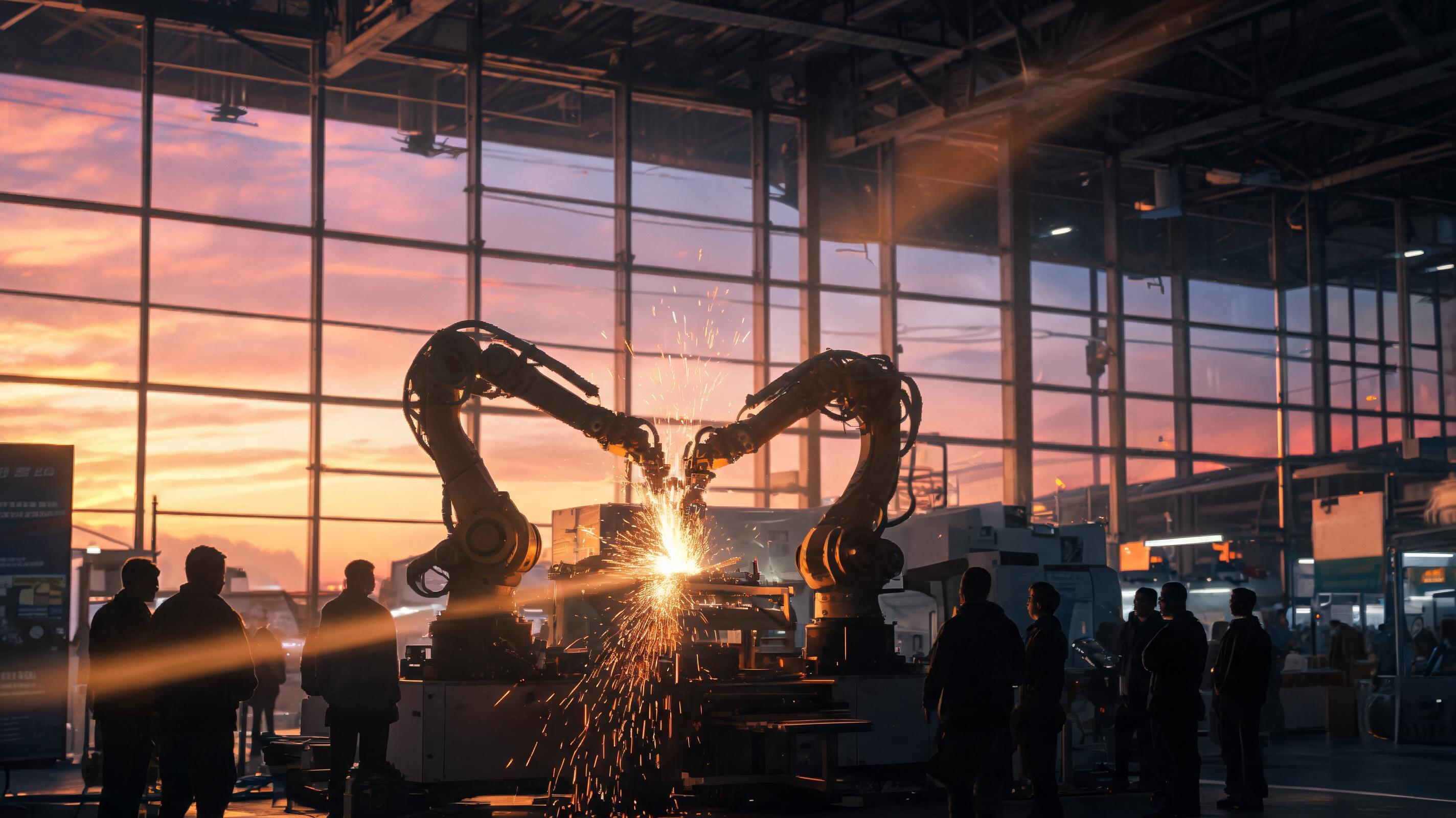
The four-day 2026 Tianjin Welding & Cutting Exhibition closed on March 21 at the National Convention and Exhibition Center (Tianjin). Running as the core section of the 22nd China Tianjin Industrial Expo (CIEX) under the theme "Intelligence-Driven Innovation, Digital-Green Transformation," the show brought together more than 300 Chinese and international industry companies, built a full-industry-chain display matrix spanning equipment, consumables, accessories, and software, and drew over 100,000 professional visitors. It stands as northern China's key welding and cutting gathering for technology demonstration, trade matching, and industry-academia-research integration.
The expo was co-hosted by the China Welding Association and Zhenwei International Exhibition Group, approved by the Ministry of Commerce and certified by UFI. International brands including Panasonic, ABB, KUKA, ESAB, and Fronius exhibited alongside strong domestic players such as Han's Laser, Hymson, Bodor Laser, Boqing Technology, Estun, and Hugong. Exhibits covered welding equipment, cutting systems, welding materials, automation accessories, inspection instruments, and environmental equipment, serving vertical applications from shipbuilding, steel structures, and towers to automotive manufacturing, pressure vessels, rail transit, aerospace, construction machinery, and new energy.
Intelligent welding and digital-intelligent transformation were the consistent highlights on the show floor. The China Welding Association's Digital Twin and Intelligent Manufacturing Special Committee staged a dedicated 500-square-meter group pavilion with Tsinghua University, Shanghai Jiao Tong University, and the Tianjin Special Equipment Inspection Institute, together with companies such as Boqing Technology and Changsha Tianyi — a research-production-application showcase where digital twins, virtual simulation, industrial large models, and embodied intelligence were fused with welding practice. Crawling welding robots and vehicle-mounted intelligent welding units attracted particular attention: they adapt to complex-structure welding, irregular groove processing, and multi-layer multi-pass welding, breaking the application limits of conventional equipment. Several intelligent welding robots equipped with high-precision sensing systems demonstrated stable operation and optimized weld precision in heavy plate ship welding, automotive body assembly, and aerospace component machining.
The cutting zone showed diversified momentum, spanning laser, plasma, and waterjet cutting. High-power fiber laser cutting systems for plate and tube delivered fine processing with stable kerf quality and a small heat-affected zone, while several laser tube cutters and coil-cutting lines optimized workflows and material utilization. Environmentally friendly cutting machines and fume purification systems were shown alongside, echoing the expo's green-transformation theme.
The welding consumables area was equally full: electrodes, solid and flux-cored wires, and fluxes appeared together with specialty materials. Fronius and ESAB brought high-end consumables for high-temperature, high-pressure, and corrosive service in nuclear power, offshore equipment, and pressure vessels, while domestic firms pushed import substitution with dedicated wires and fluxes designed for intelligent equipment. Torches, wire feeders, fixtures, and inspection instruments such as non-destructive testing devices completed the production-to-inspection chain.
Concurrent forums and matchmaking sessions deepened the business dimension. The "Intelligent Convergence: Global Manufacturing Intelligent Development Conference" and specialized technical salons discussed welding digital transformation, green manufacturing, high-end equipment localization, and special-material welding processes. Over four days the show generated more than 30 million yuan in intended transaction value and collected over 4,300 valid purchasing leads.
The broader takeaway: intelligence, digitalization, and green manufacturing are now the industry's clear direction. Automated welding lines and intelligent cutting equipment are becoming mainstream choices that ease labor pressure and stabilize quality; digital twin and simulation software keep cutting trial-and-error costs; and domestic innovators are closing the gap with international brands in smart equipment, core components, and specialty materials — pushing China's high-end equipment localization forward.